









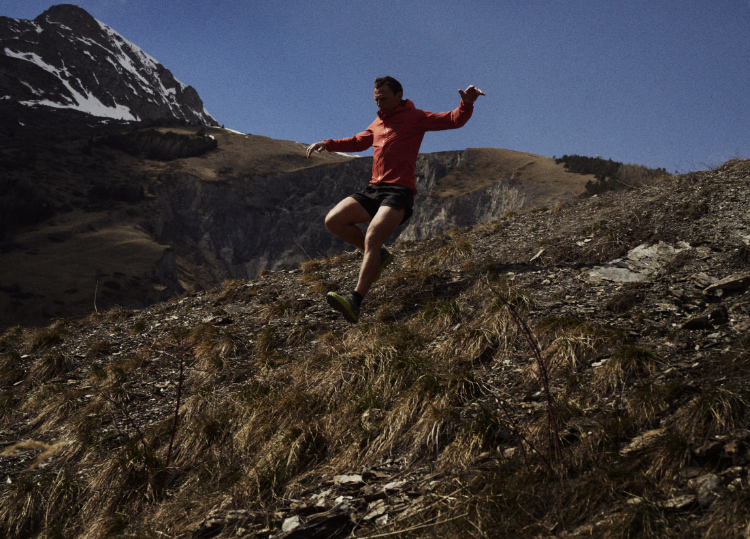
Let’s get something straight – downhill running is not easy. A high-speed battle with gravity, it requires skill, bravery and control. Get it wrong, you’re eating dirt (or worse, rocks). Get it right, you’re a human missile.
Forged in the rugged fells and mountains of the English Lake District, we have decades of experience within the team when it comes to running down hills of all gradients. Here’s our top 8 tips to own the descent.
1. Practice makes perfect
First learn the skill. You need to be as agile as possible when running downhill and have fast reactions to adjust to changes in the terrain. Make time on your training runs to practice downhills. Many people forget to practice downhills in their training.
Begin by practicing on gradual, smooth descents until you build up your confidence and speed, then gradually add in steeper gradients or rougher terrain. This will help reduce any fear you may have from the outset.
2. Lean into it
Whenever you can, especially on a gradual downhill, lean slightly forwards. Try not to slam on the brakes. Instead, have the confidence to push your upper body forwards and let gravity do its job. This takes practice and is, of course, easier to do when you’re not feeling tired mid-race!


3. Shorten your stride
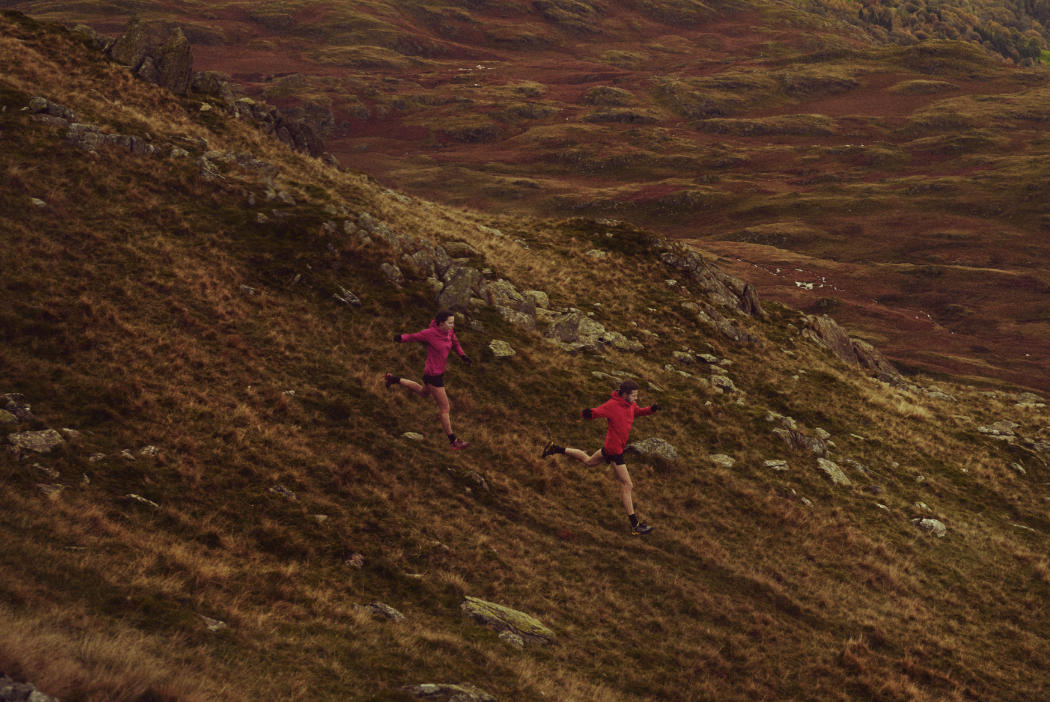
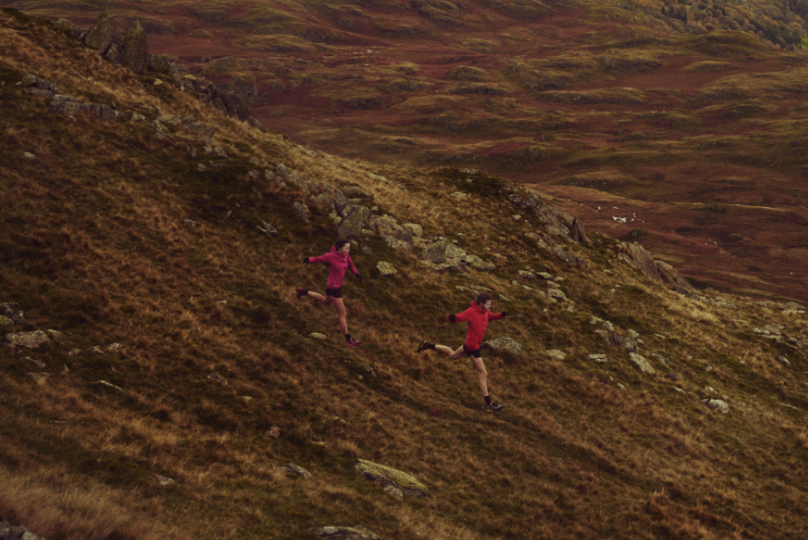
It’s not about sprinting; it’s about controlled running that allows a feeling of downhill flow. Especially on steeper ground, it pays to take short, quick steps rather than over-striding. This brings greater balance and control. You’re also less likely to trip and cartwheel into a tree.
4. Look at least two metres ahead
Don’t look directly down at the ground, instead look two meters or more ahead so you can plan your next foot placement. As confidence grows, look five metres ahead, then ten metres ahead.
This will allow you to make decisions on both foot placement and route choice. By looking directly down at your feet (which is natural to do) you risk not seeing obstacles ahead and then tripping over them.
5. Build leg strength
Your muscles need to be able to absorb the impact of the increased forces associated with running downhill, so it’s important to build leg strengthening exercises into your training plan.
Practice taking off and landing on your weaker leg. Also add core strengthening exercises to your training. Squatting (with your back against a wall) is great for building the strength you need for downhill running.
6. Channel your inner windmill
Remember your arms also have a key role to play, especially on steeper descents. Push them out, as high and wide as you feel comfortable, and use them to aid your balance – as if you were a windmill.
You might think you look strange doing so but trust us, it works. Imagine you’re on a tight rope, what would you naturally do with your arms? That’s right, stick them out wide. Balance is key in downhill running.


7. Be clever with route choice
The most direct line down a hill may not always be the fastest. Think about your route choices. Avoiding wet rocks in favour of a grassier, albeit slightly longer, alternative route can be quicker and more efficient.
If you are preparing for an off-road race, try to recce the course in advance so you can assess the downhill sections and pick the best route choices. Even when racing marked trails there can different options just metres apart – e.g. a rock-strewn option down the right or a smooth gravel option down the left).
8. Trust your footwear
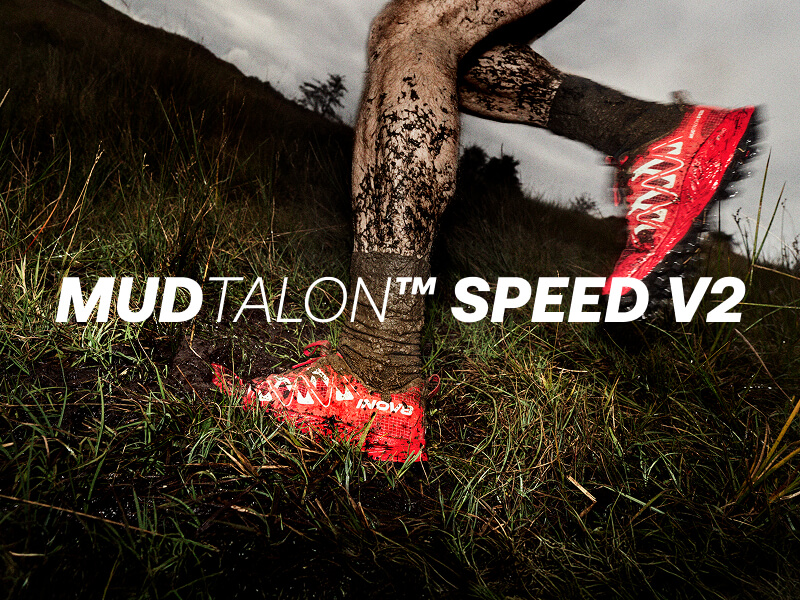
If you don’t have trust in your feet and footwear, then you might well be in trouble. Wear shoes that have the best grip for the terrain underfoot. Think about lug depth – do you need 4mm (TRAILFLY™), 6mm (TRAILTALON™) or 8mm (MUDTALON™) long lugs under your feet? The longer the lugs, the more bite they will give you, especially on softer ground and steeper gradients.