







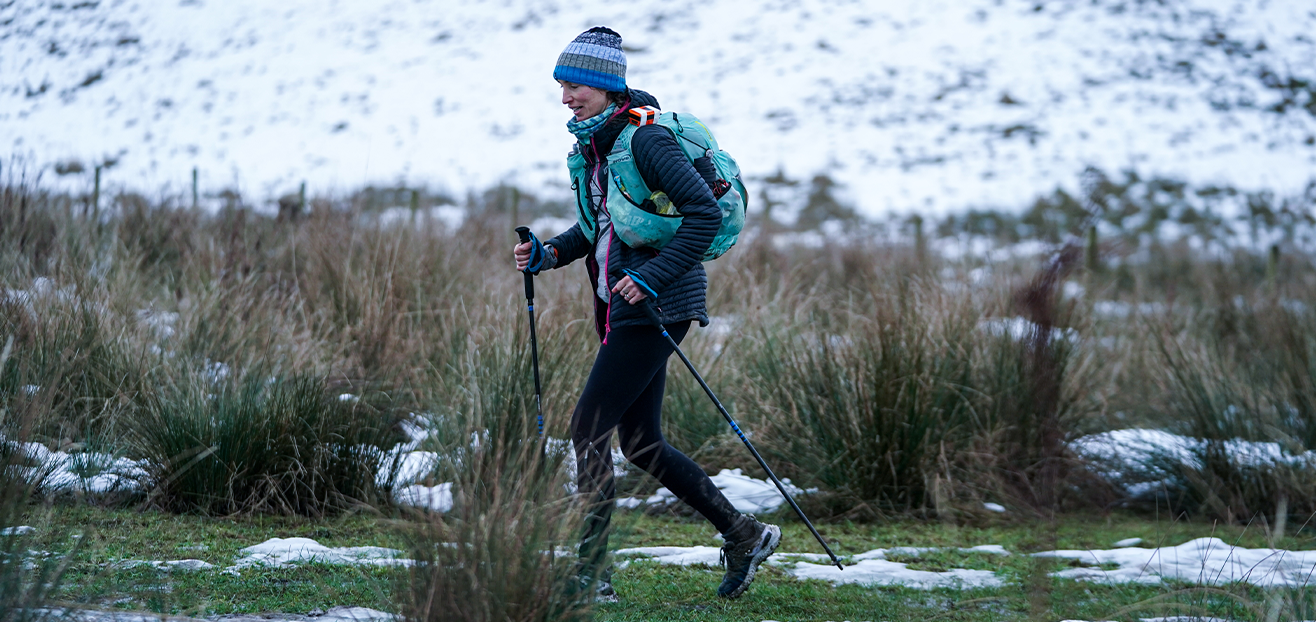
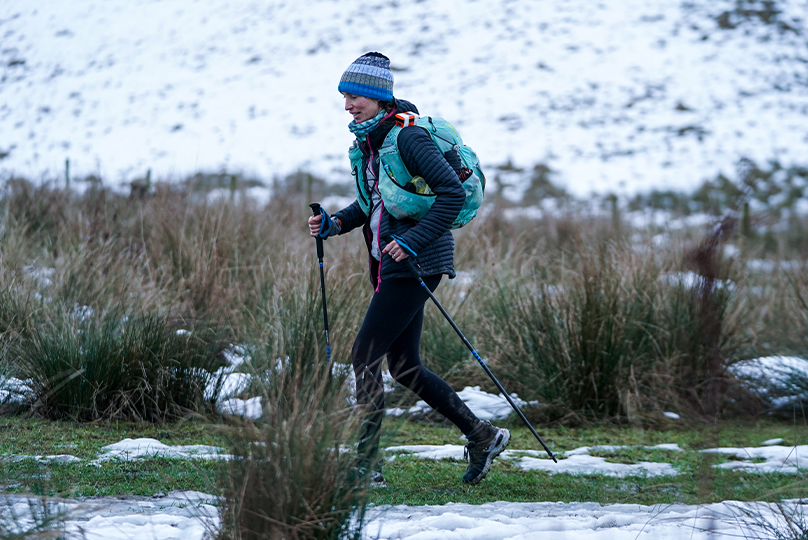
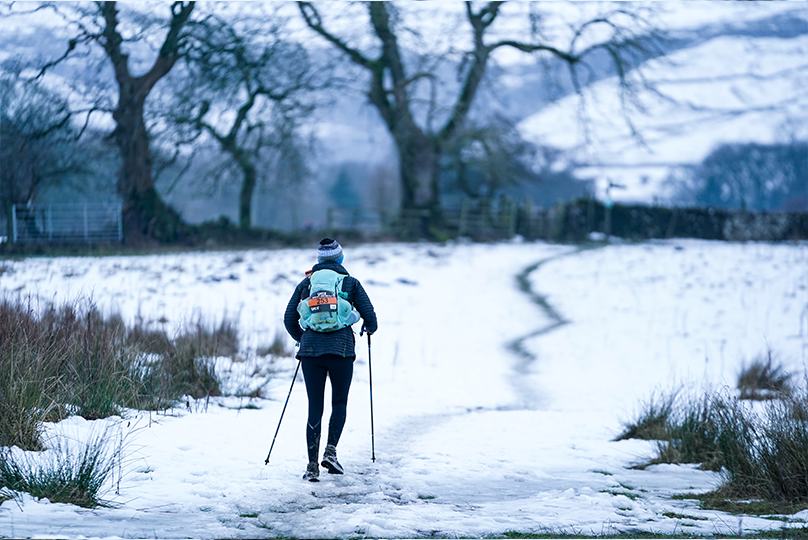
Dubbed ‘Britain’s Most Brutal’ race, the Winter Spine Race is an epic 268-mile ultramarathon up the gruelling Pennine Way. With a mammoth 37,000ft of ascent in brutal winter conditions, the race is demanding for even the hardiest of trail runners.
Starting in Edale, Peak District, runners have 168 hours to make it to Kirk Yetholm in the Scottish Borders, battling treacherous icy trails, endless muddy bogs and wildly ferocious winds, along with exhaustion and sleep deprivation.
The Winter Spine Race is as much a mental battle as it is a physical one, but what does it take to finish it? We asked two-time winter finisher (2022 and 2025) Laura Swanton-Rouvelin for her essential advice on getting across the finish line in one piece.
TOP TIPS FOR TACKLING THE SPINE RACE
The Winter Spine Race can seem a very daunting race to take part in, and I put it off for years because I was worried that the race would be too tough for me. With the following tips, I believe that you will be able to take on this beast of a race.
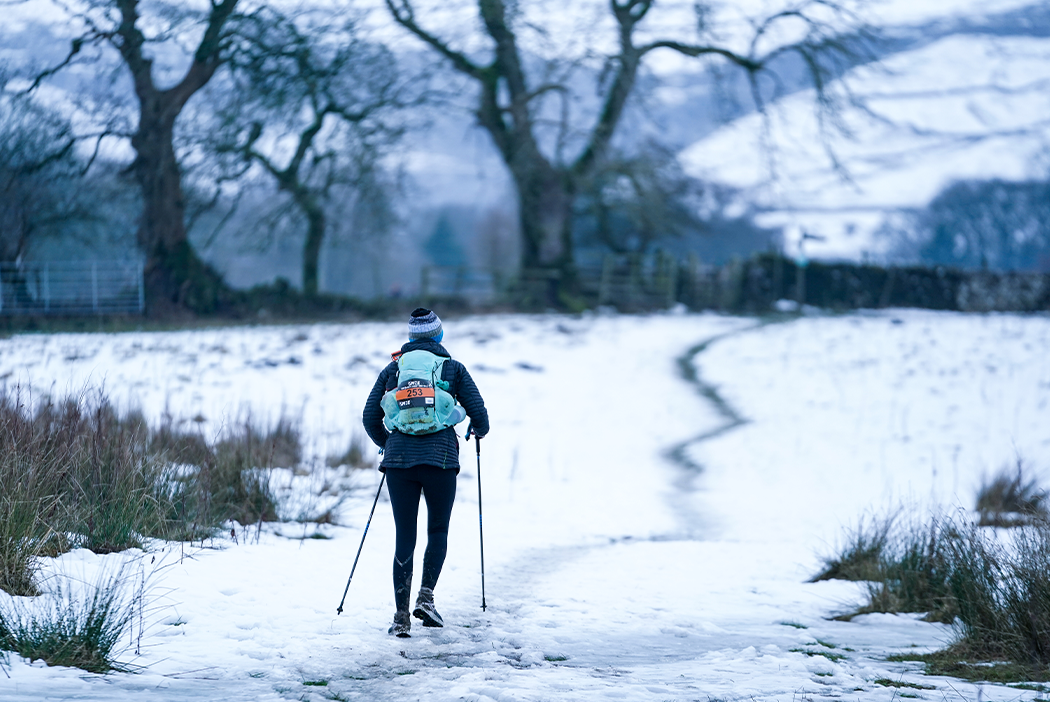
The race must be respected for what it is. 268 miles along the whole of the Pennine Way – in the middle of winter! This means that more than half your time will be spent in darkness, running through remote, lonely trails in conditions that range from fairly bleak to incredibly brutal.
Preparation is the key to conquering this race, and when you do so, there is no feeling quite like it!
KEY TRAINING
NIGHT RUNS
With such a long distance and such long nights, it is really important to incorporate night runs into your training plan to build confidence with trail running in the dark. Practice using your headtorch and learn how to deal with tricky terrain in limited light. Night runs are also useful in preparing you for the inevitable sleep deprivation. I would go to work, then start a run on Dartmoor at around 7pm, finishing around midnight. These sessions were key in building confidence and technique on the hills.
DOUBLE LONG RUNS
Back-to-back long runs will help build experience of running on tired legs. You will be running a lot of the Spine on tired legs, so this is useful experience to gain! A 20-mile run followed by the same on the following day will help replicate the fatigued running that the Spine Race involves.
RECCES
Recces aren’t essential, but, if possible, they are incredibly valuable. Before the 2025 race, I had a lovely weekend away with some amazing girlfriends, reccying the Spine route. We took in Cross Fell, which can be a daunting place to go if you have never experienced it before. It is very wild and exposed, especially if you’re up there alone in the dark! Having recce’d this section of the route with my friends, I had a totally different memory of it. It really was a mental game-changer, as well as being useful for navigation.
BUILD MILEAGE GRADUALLY
You need to think where you are starting from. Don’t suddenly attempt a 100-mile week with a 40-mile long run! This will be too much of a shock to the body if you are not used to these distances. Gradually increase the distance. If you are not used to going over 10 miles for your longest run, add two miles each week until you can reach 20 miles. Having a strong endurance engine is the key to getting through longer ultras.
HIKING
You will be hiking a lot in the Spine, especially after the 100-mile mark. Be prepared for this. It is a long way, so building up a comfortable hiking style will allow you to hike quickly and give you the edge in this race. Dedicate some sessions to pure hiking, or make sure you hike the hills in your long runs to be able to practice your technique.
TRAINING WITH YOUR PACK
The Spine Race kit list is extensive and can make for quite a heavy pack! It is definitely worth practicing with your full kit, not only to help you physically but also to mentally prepare you for the weight on your back. In my first Spine Race, I had 10kg of weight in my pack! I’ve managed to get this down to around 6kg, but it is still important to be well-practiced in carrying your kit.
FUELLING PRACTICE
Fuelling – a weakness of mine! On the Spine, it is vital. My 2025 race was the best I have ever fuelled! The first year I did the Spine Race, I felt sick from adrenaline and nerves and couldn’t eat for the first 100 miles – don’t make that mistake!
Experiment with food on your long runs and have a good variety of sweet and savoury foods that will keep you interested. Remember, it will be cold so things will harden. Top tip – Skittles become extremely hard to eat!
STRENGTH TRAINING
I am not a big fan of the gym, but after my first Spine Race I took the time to head to the gym weekly. My back was a problem, and I concentrated on building strength to help with the pack weight over the distance. One session a week really did complement my running.
STUDY THE ROUTE
Studying the route in any way you can is essential, especially if you are unable to do any recce runs. Look at maps; search for photos of the course; talk to people who have completed it. I have a great friend who went through the entire route with me using a map, giving me pointers on what to look out for – this was so useful.
PRACTICE WITH POLES
Poles are a game changer! Especially when fatigued, and for checking out how deep the bogs are. They also help preserve energy on tired legs, so get practicing with them on your long runs.
HILL REPS
Annoyingly, hill reps are great for building strength for uphill running. Even if it means fast-hiking with your pack on and repeating that same hill over and over – your body will thank you for it on race day.
WHAT KIT TO PACK
PACK
It is so important to get this right. You want a pack with enough storage for all of your gear, along with the ability to easily access what you need – food, hydration, poles, layers, etc. Go out and try a few to see how they feel.
I use the INOV8 RACEPAC 20 and it is absolutely perfect. It is so comfy and has lots of compartments that make it easy to find things and fits snug to my back. This is going to be your lifeline, so make sure that it is right.
WATERPROOFS
Waterproofs are also essential. You want to feel protected against anything the weather throws at you. In 2025, I wore the INOV8 VENTURELITE, along with the THERMOSHELL PRO. The TRAILPANT were my go-to waterproof trousers; they are so easy to run in. INOV8 now have the VENTURESHELL and CLIMASHELL PRO ALPHA jackets which athletes will use this year.
WARM LAYERS
Layering is key. The INOV8 PERFORMANCE HYBRID jacket is great for keeping you warm, with a merino long sleeve base layer and VENTURELITE MID mid-layer. At one point in the 2025 race, I had seven layers on my top half!
SOCKS
Long, knee-high waterproof socks are great to stop the bog getting in, with something like the INOV8 MERINO SOCK underneath for cosy, dry feet without blisters!
GLOVES
It is so important to keep your hands warm, as well as your feet. The INOV8 THERMAL MITT are insanely warm and were great for withstanding the rain. Changing gloves when wet is key and do it before you get too cold or it will be too late! It’s hard to come back from numb hands, so keep them warm from the start.
SHOES
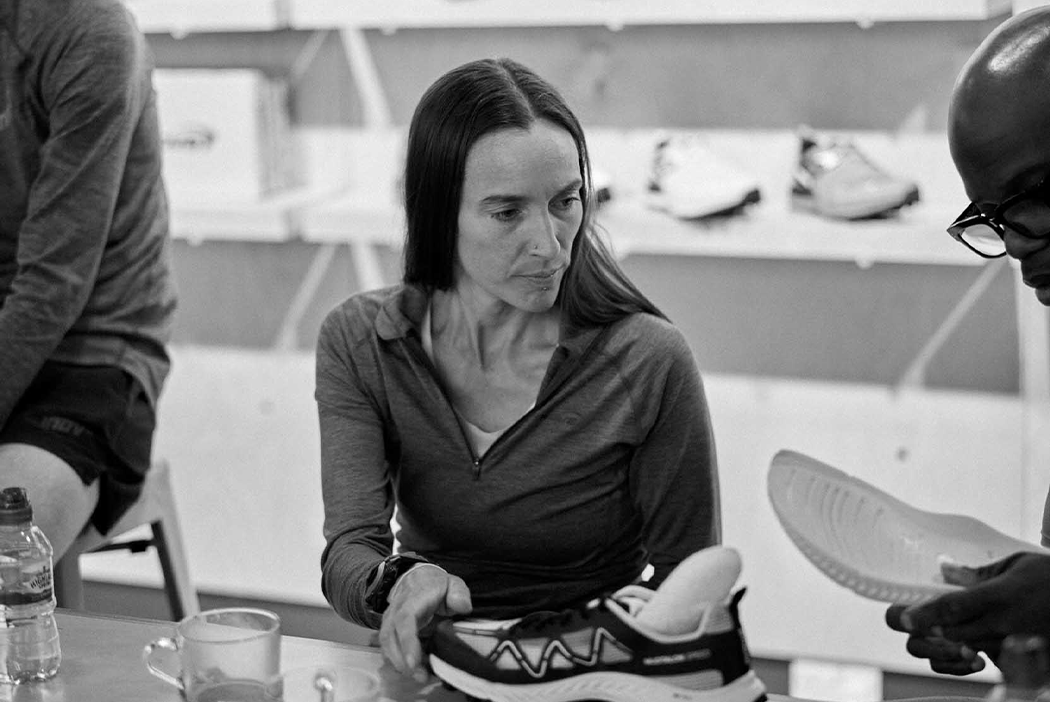
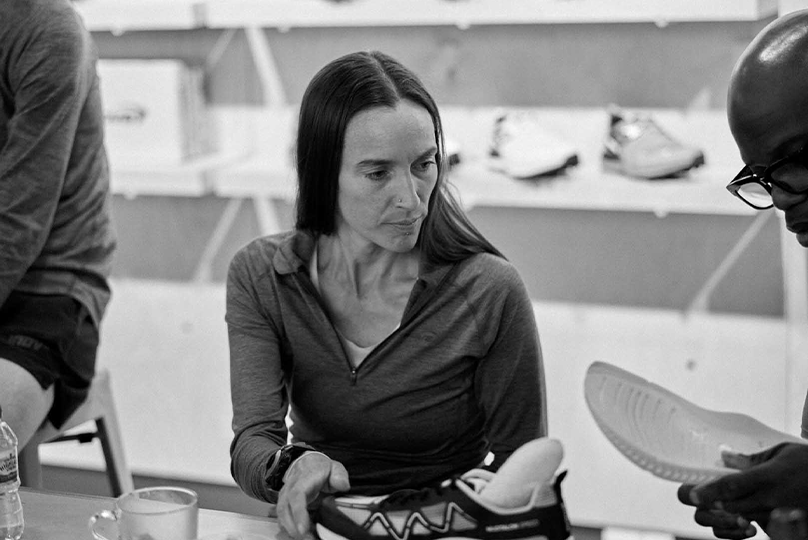
One of the most vital bits of kit. I wore the INOV8 TRAILTALON™ and they were perfect for me. The TRAILTALON MAX™ was yet to be released, but if I were to run the race again, I’d pick them for the extra cushioning.
At Alston, I swapped to a pair which was a half size up from my usual size to account for swelling of the feet. This really did help and was definitely worth doing.
EXTRA TIPS
- Plan A, B, C and D might not go as planned, but that’s okay! It’s a long race, and you need to be able to adjust your goals and your mindset. Keeping a strong mind is everything, and things can turn around quickly in this race. In my first Spine, I nearly quit at Hawes because I was in such a state. I slept when I wasn’t going to, had a shower and that helped to totally reset. The race changes all the time and you can’t be rigid with what you want from it.
- Think checkpoint-to-checkpoint, rather than the 268-mile journey. This will stop you from driving yourself mad!
- Treasure the experience. Think of all the incredible Spine moments ahead of you and work towards them. Tan Hill pub, High Cup Nick, Cross Fell, the Alston lasagne, Hadrian’s Wall, just to name a few!
- Believing is crucial. Dark times are a certainty in such a long race, but you have to remember that they won’t last. You have time to reset, so allow yourself that time.
- Sleep plan? I have never had a sleep plan for the Spine Race, and I’m sure that anyone who does deviates from it a lot! In 2025, I found that the sleep I had taken at a checkpoint made me far too sleepy and I struggled to get up afterwards. From then on, I just had 15-minute cat naps at the side of the trail every few hours, and I couldn’t believe the difference they made – this might not work for everyone, though!
i hope these tips help. Ultimately, go out and enjoy it. It is the most incredible experience, and you will treasure it forever.